
Beyond Study Guides: Exam Strategies That Address the Whole Student

Exam preparation is more than reviewing notes or memorizing formulas. Students who focus only on content miss other key performance factors.
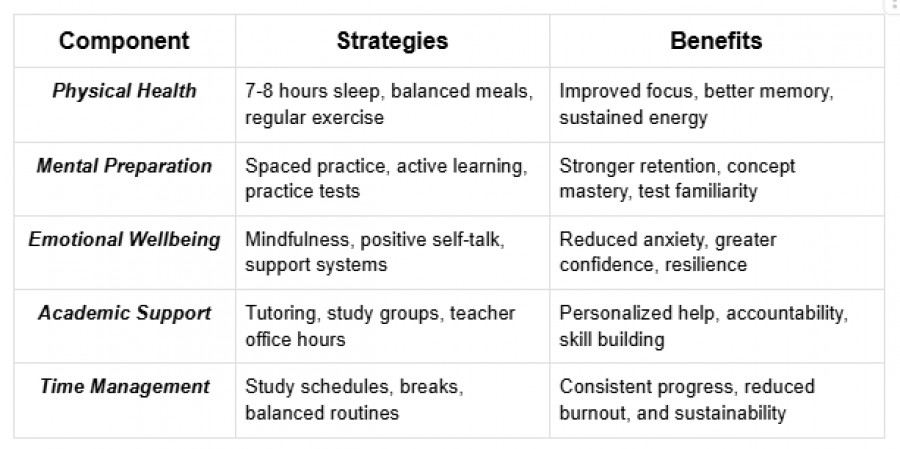
Effective exam preparation strategies address the complete student. This means supporting physical health, emotional well-being, and mental readiness alongside academic review. Students who take care of their bodies, manage their emotions, and build confidence perform better on test day. This approach recognizes that learning happens best when students feel healthy, calm, and prepared in every way.
Between 40-60% of students experience test anxiety that negatively impacts their results, according to research from UCLA's Center for Mental Health in Schools. These students may know the material well, but struggle to perform when it matters most. At Math Around the Corner in Fort Worth, we've helped hundreds of students improve their test scores by focusing on the whole person. Our tutors work with students to build not just knowledge but also the habits and mindset needed for success. The strategies below can help any student approach exams with greater confidence and better results.

Key Takeaways for Exam Success
- Physical health affects test performance. Prioritize sleep, nutrition, and regular movement during exam preparation.
- Test anxiety impacts 40-60% of students. Overcoming test anxiety often starts with simple, practical habits, such as slowing your breathing, replacing negative thoughts with steady self-talk, and using brief visualization to stay calm and focused before and during exams.
- Effective exam strategies balance content review with emotional awareness. Focus on both what you study and how you approach studying.
- Professional tutoring offers personalized support. One-on-one sessions help identify learning gaps and adapt study methods.
- Starting early improves retention. Space study sessions over time instead of relying on last-minute cramming.
What Causes Test Anxiety in Students?
Test anxiety stems from multiple sources that vary by student. Many students worry about disappointing parents, teachers, or themselves. Others fear that poor performance will limit their future opportunities. Some students lack confidence in their abilities, even when they've studied thoroughly.
Physical factors also contribute to anxiety. Poor sleep, inadequate nutrition, and lack of exercise make students more vulnerable to stress. When the body is tired or undernourished, the brain struggles to focus and recall information. Students who skip meals or stay up late cramming often perform worse than those who prioritize basic self-care.
External pressures add to the problem. High-stakes tests like the SAT or ACT can feel overwhelming. Students in competitive academic environments may feel constant pressure to excel. Fort Worth students preparing for college entrance exams often report feeling stressed about meeting expectations from multiple sources.
Learning differences and past experiences shape anxiety levels, too. Students with ADHD or learning disabilities frequently experience higher test anxiety. Those who have performed poorly on previous tests may develop a fear of repeating the experience. This creates a cycle where anxiety itself becomes a barrier to success.
How Physical Health Impacts Test Performance
Your body and brain work together during exams. When physical health suffers, mental performance declines. Students need adequate sleep, proper nutrition, and regular movement to perform their best.
Sleep directly affects memory and focus. During sleep, the brain processes and stores information learned during the day. Students who sleep less than 7-8 hours before a test typically score lower than well-rested peers. Research shows that pulling an all-nighter to study often backfires because the brain cannot effectively recall information when exhausted.
Nutrition fuels brain function. Eating balanced meals with protein, whole grains, and healthy fats helps maintain steady energy and concentration. Students who skip breakfast or rely on sugary snacks experience energy crashes that make focusing difficult. Staying hydrated is equally important, as even mild dehydration can impair cognitive function.
Physical activity reduces stress and improves mood. Exercise releases endorphins that help manage anxiety and boost mental clarity. Even a 10-minute walk before an exam can help calm nerves and sharpen focus. Students who exercise regularly report feeling more confident and less overwhelmed by academic pressure.
Creating healthy routines takes planning. Students should aim for consistent sleep schedules, especially during exam periods. Preparing nutritious meals ahead of time removes the stress of last-minute food decisions. Building movement into daily routines, whether through sports, walking, or stretching, supports both physical and mental health.
Building Emotional Resilience for Exam Success
Emotional well-being plays a major role in test performance. Students who manage their feelings effectively stay calmer and think more clearly during exams. Developing emotional resilience helps students bounce back from setbacks and approach challenges with confidence.
Mindfulness techniques reduce anxiety in the moment. Deep breathing exercises can lower heart rate and ease panic. Before starting an exam, students can take five slow, deep breaths to center themselves. Some students find it helpful to practice progressive muscle relaxation, tensing and releasing different muscle groups to release physical tension.
Positive self-talk replaces negative thoughts. Many students tell themselves they're going to fail or that they're not smart enough. These thoughts increase anxiety and become self-fulfilling. Instead, students can practice affirmations like "I've prepared well" or "I can handle this challenge." Over time, this shifts the mindset and builds genuine confidence.
Visualization prepares the mind for success. Students can mentally rehearse taking the exam, imagining themselves staying calm and working through problems. This technique helps the brain recognize the testing situation as manageable rather than threatening. Athletes use visualization to improve performance, and the same principle applies to academic challenges.
Support systems make a difference. Exam strategies improve when students talk with trusted adults about their worries. Parents, teachers, and tutors offer perspective and encouragement. At Math Around the Corner, our one-on-one tutoring creates a safe space where students discuss concerns and build skills at their own pace.
Effective Exam Preparation Strategies That Work
Strategic preparation involves more than studying hard. Students need smart approaches that maximize learning while minimizing stress. The following test-taking strategies help students prepare efficiently and perform confidently.
Start early and space out study sessions. Cramming may feel productive, but it leads to poor retention. Students who review material over several weeks remember more than those who study intensively at the last minute. Breaking study time into focused 30-50 minute sessions with short breaks helps maintain concentration.
Practice with realistic conditions. Taking practice tests under timed conditions prepares students for the actual exam experience. This builds familiarity with question formats and helps identify weak areas. Students should review wrong answers carefully to understand their mistakes. Our SAT and ACT preparation programs include multiple practice tests that simulate real exam conditions.
Create study materials that promote active learning. Reading notes passively is less effective than engaging with content. Students should make flashcards, teach concepts to others, or create practice questions. These activities force the brain to process information more deeply, improving retention and understanding.
Focus on understanding, not memorization. Students who grasp underlying concepts can apply knowledge to new problems. Those who only memorize facts struggle when questions are worded differently. Tutors can help students build conceptual understanding by explaining material in multiple ways and connecting ideas to real-world examples.
Organize study materials by topic and difficulty. Students should identify their strongest and weakest areas, then allocate time accordingly. Spending too much time on easy material wastes valuable study hours. Prioritizing challenging topics leads to greater overall improvement.
How to Overcome Test Anxiety: Practical Techniques
Overcoming test anxiety requires both prevention and in-the-moment strategies. Students need tools they can use before and during exams to manage their stress effectively.
Before the exam:
- Get a full night's sleep for several days leading up to the test
- Eat a nutritious breakfast with protein and complex carbohydrates
- Arrive early, but avoid anxious classmates who might increase worry
- Review main concepts briefly rather than cramming new information
- Use positive affirmations to build confidence
During the exam:
- Read all instructions carefully before starting
- Answer easier questions to build momentum and confidence
- Skip difficult questions and return to them later
- Use deep breathing if panic starts to rise
- Focus on one question at a time rather than the entire test
Managing common anxiety symptoms:
- Racing heart: Take three slow, deep breaths
- Blank mind: Move to a different question to reset your thinking
- Negative thoughts: Remind yourself of your preparation
- Physical tension: Stretch your arms or roll your shoulders
- Time pressure: Keep a steady pace without rushing
Students who practice these techniques regularly find them more effective during actual exams. Waiting until test day to try new strategies often doesn't work. Building these skills over time makes them automatic when stress levels rise.
The Role of Academic Support in Test Preparation
Professional support helps students develop both knowledge and confidence. Working with an experienced tutor provides personalized attention that addresses individual needs. This support goes beyond explaining content to building effective study habits and test-taking skills.
Tutors identify specific learning gaps that might not be obvious to students. A student who struggles with algebra word problems might actually need help with reading comprehension. Skilled tutors recognize these underlying issues and address them directly. This targeted approach leads to faster progress than generic study methods.
Regular tutoring sessions create accountability. Students who know they'll meet with a tutor each week are more likely to complete assignments and review material consistently. This steady progress builds knowledge gradually rather than in stressful cramming sessions before exams.
The relationship between student and tutor matters. When students feel comfortable asking questions and admitting confusion, learning accelerates. They're more willing to take risks and try new approaches. Math Around the Corner carefully matches students with tutors whose teaching styles fit each student's personality and learning needs.
Tutoring provides a safe environment to make mistakes, which supports effective test-taking strategies. In regular classrooms, students may hold back questions out of fear of judgment. One-on-one sessions remove that pressure, allowing students to work through confusion, learn from errors, and build real understanding.
Creating a Balanced Study Schedule
Time management is part of effective exam preparation strategies. Students need schedules that balance study time with rest, recreation, and self-care. Burnout hurts performance as much as insufficient preparation.
Weekly planning framework:
- Schedule specific study times for each subject
- Include breaks every 50-60 minutes during study sessions
- Plan physical activity at least 3-4 times per week
- Reserve time for social connections and hobbies
- Maintain consistent sleep and wake times
- Build in buffer time for unexpected events
Students should start exam preparation at least 2-3 weeks in advance for major tests. This timeline allows for thorough review without excessive daily study hours. For particularly important exams like the SAT or ACT, starting 2-3 months early provides even better results.
Breaking large tasks into smaller steps makes studying feel manageable. Instead of "study for biology exam," students can plan "review chapters 1-3" or "make flashcards for cell structure." These specific tasks are easier to complete and provide a sense of accomplishment.
Flexibility is important, especially for overcoming test anxiety. Students benefit from adjusting study schedules based on what works best. If evening sessions disrupt sleep, morning review may be more effective. A sustainable routine supports both learning and overall well-being.
Well-rounded Exam Preparation Framework

Get Support for Academic Success
Test preparation doesn't have to feel overwhelming. With the right strategies and support, students can approach exams feeling prepared and confident. Math Around the Corner has helped hundreds of Fort Worth students improve their test scores through personalized tutoring that addresses the whole student.
Our experienced tutors work with students from kindergarten through college, providing customized instruction that builds both knowledge and confidence. We focus on understanding individual needs and creating learning plans that work for each student's unique situation.
Ready to help your student succeed?
Call us at (817) 720-6284 or email scheduling@matharoundthecorner.com to discuss your student's needs and get started with tutoring that makes a real difference. Our boutique approach provides the personal attention and support that helps students thrive academically and beyond.