
The College Application Timeline: When to Start and What Parents Need to KnowThe College Application Timeline: When to Start and What Parents Need to Know

The college application process feels overwhelming to most families. Between SAT preparation, essay writing, recommendation letters, and financial aid forms, parents and students struggle to manage everything. Understanding the timeline makes the process less stressful and increases your chances of acceptance.
Competition for college admission has reached new heights. The 2024-2025 application cycle saw a 4 percent increase in the number of applicants and a 6 percent rise in total applications submitted compared to the previous year, according to Empowerly's analysis of Common Application data. At the same time, acceptance rates at top schools have dropped dramatically, with many selective institutions admitting fewer than 5 percent of applicants.
At the top 250 schools, essays account for approximately 25 percent of your application weight, according to CollegeVine research. This means students need excellent college essay help to stand out in increasingly competitive pools. Starting early and understanding each phase of the application process creates better outcomes.
Math Around the Corner has guided Fort Worth students through college applications since 2006. We provide college application help, including SAT and ACT preparation, college application essay help, and strategic planning. This guide outlines when to start each component and what support parents should seek.

Key Takeaways
Start planning in freshman year. Building strong grades and meaningful activities from ninth grade forward creates competitive applications.
Focus on essays during the summer before senior year. This timing allows adequate time for writing and revision without competing academic demands.
Get professional college application help early. Working with tutors for SAT preparation and college essay help improves outcomes significantly.
Apply strategically using Early Decision or Early Action. These programs offer admission advantages but require earlier preparation and commitment.
Stay organized with deadlines and requirements. Managing multiple applications simultaneously requires careful planning and calendar management
Understanding the College Application Landscape
College admissions have changed dramatically over the past decade. More students apply to more schools than ever before. The average student now applies to 6.10 schools, up from fewer than 6 schools just a few years ago.
This increased competition means students cannot wait until senior year to begin preparation. The strongest applications result from years of planning, not last-minute efforts. Parents who understand this timeline help their children build competitive profiles.
Early planning also reduces stress. Families who start late find themselves rushing through essays, cramming for standardized tests, and making hasty school selections. This pressure creates poor-quality applications and missed opportunities.
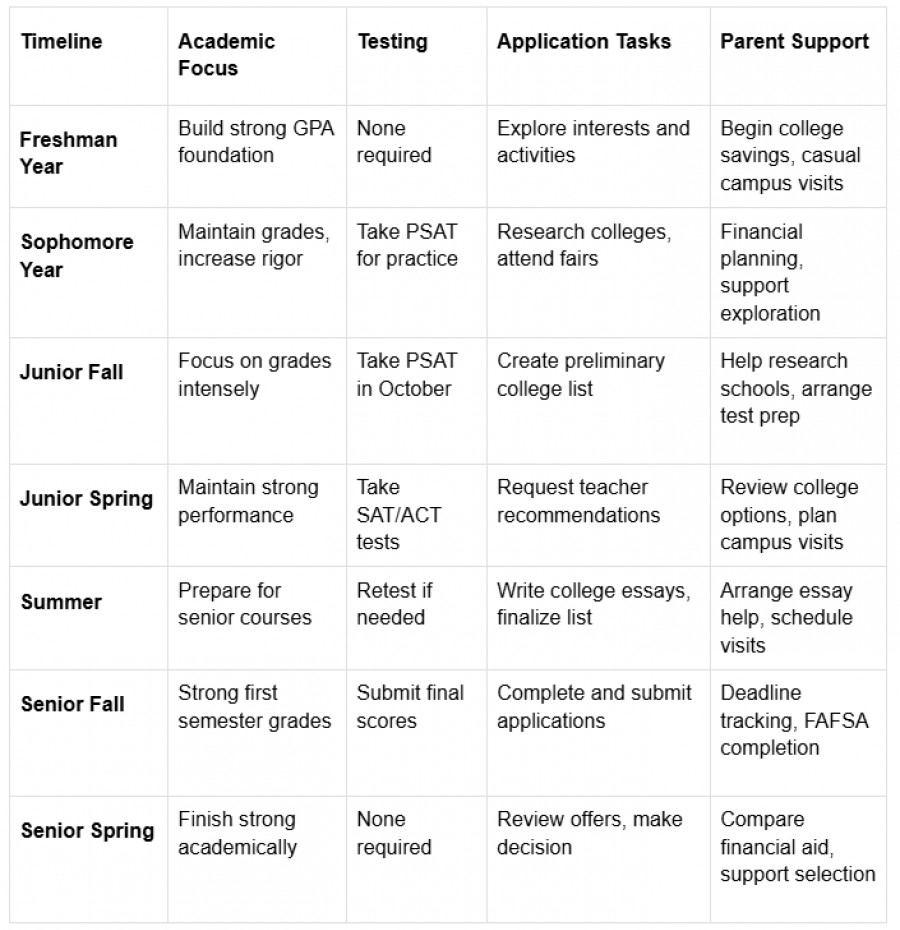
The timeline below breaks down when to complete each component. Following this schedule positions students for success without overwhelming them.
Freshman Year: Building the Foundation
Many parents think freshman year is too early to consider college. However, the grades students earn in ninth grade appear on transcripts that colleges review. Building strong study habits and achieving good grades from the start matters.
Students should focus on academics during freshman year. Take challenging courses appropriate to your skill level. Develop good relationships with teachers who may later write recommendation letters. Get involved in activities that genuinely interest you rather than padding your resume.
Parents can begin conversations about college during this time. Discuss different types of schools, potential majors, and family expectations. Visit local colleges casually to start familiarizing students with campus environments. Keep these discussions light and exploratory rather than pressuring.
Freshman year priorities:
Focus on achieving strong grades in all courses
Join activities based on genuine interests
Begin casual college exploration conversations
Establish good study habits and time management skills
Sophomore Year: Exploring Options
Sophomore year offers time to explore without deadline pressure. Students should continue building their academic records while deepening involvement in meaningful activities. Quality matters more than quantity when it comes to extracurriculars.
This year also provides good timing for preliminary standardized test preparation. Students can take the PSAT as practice without pressure. Some students begin light SAT or ACT preparation, though intensive studying typically waits until junior year.
College exploration becomes more intentional during the sophomore year. Families can attend college fairs, research different schools online, and visit campuses during trips. Help students begin thinking about what size school, location, and academic programs interest them.
Parents should also begin financial planning during this time. Understanding costs and exploring options like 529 plans, scholarships, and financial aid helps families make informed decisions later.
Sophomore year priorities:
Maintain strong grades and increase course rigor if possible
Take the PSAT for practice and baseline scores
Begin exploring colleges through visits and research
Deepen involvement in meaningful extracurricular activities
Junior Year Fall: Intensifying Preparation
Junior year is when college preparation shifts into higher gear. This year's grades matter tremendously, and students begin formal standardized test preparation. The fall semester focuses on academics and testing.
Students should take the PSAT in October of junior year. This test qualifies students for National Merit Scholarships and provides practice for the SAT. Scores help identify areas needing improvement before taking the actual SAT or ACT.
Many students begin working with tutors for SAT or ACT preparation during their junior year in the fall. Professional help with college applications starts with test prep. Math Around the Corner offers personalized tutoring that addresses individual weak areas rather than generic test strategies.
This semester also involves creating a preliminary college list. Students should identify 15 to 20 schools spanning safety, target, and reach categories. Research admission requirements, application deadlines, and whether schools require SAT Subject Tests or additional materials.
Junior year fall priorities:
Take PSAT in October for scholarship eligibility
Begin intensive SAT or ACT preparation with tutors
Create preliminary college list with varied selectivity
Focus intensely on maintaining high grades
Junior Year Spring: Testing and Initial Planning
The spring of junior year involves taking standardized tests and beginning application preparation. Most students take the SAT or ACT in March, May, or June. Taking tests in spring allows time for retakes in fall if needed.
Students seeking help with college applications should begin working with counselors or tutors during this period. At Math Around the Corner, we help families create application timelines, understand school requirements, and begin brainstorming essay topics.
This semester also involves selecting teachers for recommendation letters. Choose teachers from core subjects who know you well and can write detailed, positive letters. Ask in person rather than through email, and request letters before summer vacation begins.
Students should attend any available college admission presentations at their high schools. Many colleges visit schools during the spring to provide information about their programs and application processes. These sessions offer valuable insights and demonstrate interest.
Junior year spring priorities:
Take SAT or ACT tests for first scores
Request recommendation letters from teachers
Begin brainstorming college essay topics
Attend college admission presentations and information sessions
Summer Before Senior Year: Essay Writing Time
The summer between junior and senior year provides the best time for essay writing. Students have completed junior year coursework and don't yet face senior year demands. Families should prioritize essay work during these months.
Quality college application essay help makes a tremendous difference during this period. Essays account for 25 percent of application weight at selective schools. Students with strong essays dramatically increase their admission chances compared to those with weak essays.
Professional support helps students identify compelling topics, structure essays effectively, and polish their writing. Parents often struggle to provide objective feedback on their children's essays. Working with experienced tutors who understand what admissions officers seek creates better results.
Students should also finalize their college lists during the summer. Research application requirements for each school. Note whether schools offer Early Decision, Early Action, or only Regular Decision options. Understanding these differences helps families make strategic application choices.
Campus visits provide valuable information during the summer months. Visit schools on your list when possible. Attending tours and information sessions helps students determine fit and demonstrates interest to colleges.
Summer before senior year priorities:
Write and revise college application essays with professional help
Finalize college list with specific application requirements
Visit campuses and attend information sessions
Retake SAT or ACT if needed to improve scores
Senior Year Fall: Submitting Applications
The fall of senior year involves completing and submitting applications. Early Decision and Early Action deadlines typically fall in early November. Regular Decision deadlines usually occur in January or February.
Students applying Early Decision or Early Action should submit applications by early November. These programs offer admission advantages at many schools. However, Early Decision is binding, meaning students must attend if admitted. Families should understand these commitments before applying.
The fall semester requires managing multiple deadlines simultaneously. Students must continue earning strong grades while completing applications, writing supplemental essays, and maintaining activities. Organization becomes critical.
Parents can help by creating deadline calendars, reminding students of upcoming dates, and reviewing applications before submission. However, students should complete the actual work themselves. Colleges want authentic student voices in essays, not parent-edited versions.
Financial aid applications also begin during the fall semester. Complete the FAFSA (Free Application for Federal Student Aid) as soon as possible after October 1. Some schools also require the CSS Profile. Missing financial aid deadlines can cost families thousands of dollars in assistance.
Senior year fall priorities:
Submit Early Decision or Early Action applications by November deadlines
Continue achieving strong first-semester grades
Complete and submit Regular Decision applications
File FAFSA and CSS Profile for financial aid consideration
Senior Year Spring: Making Final Decisions
The spring of senior year involves receiving admission decisions and selecting a school. Early Decision and Early Action results typically arrive in December. Regular Decision notifications come in March or April.
Students admitted through Early Decision must withdraw other applications and commit to attending. Those admitted through Early Action have until May 1 to decide. Regular Decision students also must commit by May 1.
This period often includes visiting admitted student days. Schools host special events for accepted students to help them make final decisions. These visits provide opportunities to meet future classmates, explore programs in detail, and ask questions.
Financial aid packages arrive with admission letters. Compare offers carefully, considering not just the first year but the total four-year costs. Some schools provide more generous aid than others. Understanding net cost helps families make affordable choices.
Senior year spring priorities:
Review admission decisions and financial aid packages
Visit schools during admitted student days
Make final college selection and submit deposit by May 1
Complete any remaining scholarship applications
Complete College Application Timeline
Getting the Best College Application Help in Fort Worth
College applications involve complex steps that many families are unfamiliar with. Understanding test strategies, essay requirements, and application timelines takes years of experience. Structured college application help improves results and eases family pressure.

Math Around the Corner provides complete college application help for Fort Worth students. Our services include SAT and ACT preparation with personalized tutoring, college application essay help from experienced advisors, and strategic planning for the entire application process.
We've helped hundreds of students gain acceptance to their top-choice schools. Our tutors understand what makes essays stand out and how to present students' strengths effectively. We work with families throughout the entire process, from initial planning through final decisions.
Starting early creates the best results. Students who begin SAT preparation and essay work with adequate time produce stronger applications than those who wait until deadlines approach. We recommend contacting us during sophomore or junior year to establish a complete preparation plan.
Ready to help your student succeed with college applications?
Call (817) 720-6284 or email hello@matharoundthecorner.com to discuss your timeline and explore our college prep services. We provide college essay best practices and the support Fort Worth families need for admission success.