
Tutoring Homeschool Students: What Traditional Teachers Don't Understand

Many excellent teachers struggle when they start tutoring homeschool students. They bring years of classroom experience and strong subject knowledge, yet they find that homeschool tutoring requires a completely different approach. What works in a classroom of 25 students often fails with homeschooled children learning at home.
The difference goes deeper than smaller class sizes. Homeschooling creates a unique educational environment with different goals, schedules, and expectations. Understanding these differences separates average tutors from the best homeschool help available.
In the 2024-2025 school year, homeschooling grew at an average rate of 4.9%, nearly three times the pre-pandemic growth rate, according to Johns Hopkins University School of Education's Homeschool Hub. This growth means more families need tutors for homeschooling who understand their specific needs.
Math Around the Corner has worked with both traditionally schooled students and homeschool families in Fort Worth since 2006. We've learned what makes tutoring homeschool students different and how to provide support that actually helps.
Key Takeaways for Effective Homeschool Tutoring
Respect mastery-based pacing. Let students take the time they need to truly understand concepts instead of rushing through predetermined schedules.
Adapt to flexible scheduling. Homeschool families need daytime appointments and year-round availability that traditional school schedules don't accommodate.
Work with chosen curricula. Support whatever materials families select rather than criticizing unfamiliar approaches or pushing for changes.
Honor parent authority. Parents remain the primary educators and decision-makers when you tutor their homeschooled children.
Define success by family goals. Measure progress according to what each family values instead of imposing standardized expectations.
Traditional School Structure vs. Homeschool Flexibility
Traditional teachers work within rigid structures. The school district selects the curriculum. The calendar determines pacing. Grade levels group students by age. Testing happens on fixed dates. Teachers must move classes through material at predetermined speeds regardless of individual understanding.
This structure shapes how traditional teachers think about education. They assume all students need the same content at the same time. They expect everyone to progress at similar rates. They view grade level as the primary measure of where students should be academically.
Homeschooling works differently. Parents choose their own curriculum from thousands of options. They set their own schedules and pacing. Children work at their actual skill level rather than their age-based grade level. Learning happens year-round or follows alternative calendars. Progress depends on mastery, not calendar dates.
When traditional teachers start tutoring homeschool students, they often try to impose classroom structures. They ask what grade the student is in and make assumptions about what that means. They expect to follow a textbook chapter by chapter. They want to prepare students for standardized tests that may not apply.
This approach frustrates both tutors and families. The tutor feels confused because the student doesn't fit the expected patterns. The family feels misunderstood because the tutor ignores their chosen educational approach.
The key difference: Traditional teachers must manage groups and systems. Tutors for homeschooling must adapt to individual families and their chosen methods.
Understanding Mastery-Based Learning
Classroom teachers typically use time-based learning. The class studies fractions for two weeks, then moves to decimals, whether students understand or not. The calendar drives instruction, not student readiness.
Most homeschool families use mastery-based learning instead. Students work on a topic until they truly understand it, then move forward. This might take three weeks for one concept and three days for another. Progress depends on comprehension, not time spent.
Traditional teachers often struggle with this approach. They worry that spending extra time on difficult topics will make students fall behind. Behind what? Behind the arbitrary schedule that traditional schools create.
Homeschool parents don't care if their child takes longer to master long division. They care that their child actually understands it before moving on. This prevents the learning gaps that plague many traditionally schooled students.
Effective homeschool tutoring requires embracing this approach. A good homeschool tutor doesn't push through material according to a predetermined plan. Instead, they work at the student's pace, making sure a solid understanding is achieved before advancing.
This feels uncomfortable to traditional teachers at first. They're trained to cover content within specific timeframes. But homeschool support works better when tutors let mastery guide pacing rather than calendars.
The Multi-Level Student Reality
In traditional classrooms, students are grouped by age and expected to perform at grade level across all subjects. A third grader takes third-grade math, reading, science, and social studies. The system assumes relatively even development.
Homeschooled students often work at different levels in different subjects. A child might use fifth-grade math, third-grade writing, and seventh-grade science materials simultaneously. This reflects their actual abilities rather than age-based expectations.
Traditional teachers find this confusing. They want to know the student's grade level to determine appropriate instruction. But grade level means little in homeschool contexts.
A homeschool parent might say their child is a fourth grader working two years ahead in math and one year behind in writing. Traditional teachers hear this as a problem. Why is the child behind in one area? Shouldn't everything balance out?
Homeschool families see this as normal and healthy. It shows they're addressing each subject according to the child's needs rather than forcing artificial consistency. The child who loves math can advance rapidly. The child who struggles with writing gets extra time to develop those skills without shame.
The best homeschool help respects these differences. Tutors assess where students actually function in specific subjects rather than making assumptions based on age. They adjust instruction to match current abilities while helping students progress at appropriate rates.
Scheduling and Availability Differences
Traditional teachers work during school hours. Students take classes from 8 AM to 3 PM, Monday through Friday, following the academic calendar. Everyone shares the same schedule constraints.
Homeschool families create their own schedules. Some prefer morning academics and afternoon activities. Others start late and work into the evening. Some take field trips on Wednesdays. Many travel during traditional vacation periods and attend school during summer months.
Traditional teachers transitioning to homeschool tutoring often expect standard after-school appointment times. They're surprised when families request Tuesday mornings or Friday afternoons. They struggle with requests for tutoring during the summer months when they expect vacation.
This inflexibility creates problems. Homeschool families need tutors who adapt to their schedules, not tutors who require families to adapt to traditional school calendars and hours.
Math Around the Corner specifically accommodates homeschool schedules. We offer daytime appointments when traditionally schooled students are unavailable. We work year-round because homeschool families often continue learning through summer. This flexibility makes us effective tutors for homeschooling families.
Curriculum Diversity and Adaptation
Traditional teachers use district-approved textbooks and materials. They might have some choice in supplementary resources, but the core curriculum is predetermined. This creates consistency but limits flexibility.
Homeschool families choose from hundreds of curriculum options. Some use traditional textbooks. Others prefer online programs, unit studies, Charlotte Mason methods, classical education, or unschooling approaches. Many blend multiple philosophies.
Traditional teachers expect to tutor using familiar materials and methods. When a homeschool family presents an unusual curriculum, these teachers feel lost. They don't understand the philosophy behind the choices. They question whether the materials are adequate.
This creates tension. The tutor wants to recommend changing the curriculum to something more familiar. The family chose their materials carefully and wants support with what they've selected, not criticism.
Effective homeschool support requires curriculum flexibility. Tutors must work with whatever materials families choose. They need skills to assess whether curricula are working without dismissing unfamiliar approaches.
Good homeschool tutors ask questions: What are you using? Why did you choose this approach? What's working well? Where does your child struggle? They adapt their tutoring to complement the family's chosen materials rather than fighting against them.
Different Measures of Success
Traditional schools measure success through grades, test scores, and grade-level benchmarks. Students take standardized tests at specific intervals. Report cards come out quarterly. Everyone compares results.
Homeschool families define success differently. Some care deeply about test scores. Others focus on developing a love of learning. Some prioritize real-world skills over academic benchmarks. Many value family relationships and character development equally with academics.
Traditional teachers often impose classroom success metrics on homeschool students. They worry about grade-level performance without understanding that homeschool families may reject that entire framework. They push test preparation for exams that the family doesn't plan to take.
This misalignment frustrates everyone. The tutor feels the family lacks appropriate academic rigor. The family feels the tutor doesn't understand their educational goals.
The best homeschool help starts by understanding what each family values. What are their educational goals? How do they measure progress? What concerns do they have? Effective tutors align their support with family priorities rather than imposing external standards.
At Math Around the Corner, we begin every tutoring relationship by discussing family goals. We adapt our approach to support what parents want to achieve, whether that's standardized test preparation, mastery of concepts, or building confidence and love of learning.
The Parent-Teacher-Student Triangle
In traditional schools, teachers have authority over students during school hours. Parents support from home, but don't control what happens in the classroom. Clear boundaries separate these roles.
Homeschooling changes this dynamic completely. Parents are the primary teachers. They choose curriculum, set standards, and make educational decisions. When they hire tutors, they're looking for support, not replacement.
Traditional teachers sometimes try to take charge when tutoring homeschool students. They tell parents what curriculum to use. They set homework requirements without consulting the family. They make decisions that belong to parents.
This creates immediate conflict. Homeschool parents didn't leave traditional schools just to hand control to another teacher. They want collaboration, not dictation.
Tutoring homeschool effectively requires respecting parent authority. The parent remains in charge. The tutor provides knowledge and support but doesn't override family decisions. Good communication between the parent and tutor creates the best results.
We train our tutors to work as partners with homeschool parents. We discuss approaches before implementing them. We provide recommendations but respect that parents make final decisions. This collaborative model works far better than traditional teacher-student relationships.
Socialization Myths and Realities
Traditional teachers often worry about socialization when they learn that students are homeschooled. They imagine isolated children with limited social interaction. This concern sometimes affects how they approach tutoring.
The reality differs dramatically. Research shows that homeschooled students typically engage in multiple social activities. They participate in sports teams, music lessons, art classes, co-ops, religious groups, and community activities. Many homeschoolers have richer social lives than traditionally schooled children, who spend most waking hours in age-segregated classrooms.
Tutors who believe homeschooled students lack socialization may try to compensate by being overly social during lessons. They want to provide the interaction they think students miss. This distracts from learning and wastes tutoring time.
Other tutors assume homeschooled students can't handle group settings. They avoid any collaborative learning activities that might actually benefit students.
The best homeschool help treats socialization as irrelevant to tutoring effectiveness. Social development happens through the family's chosen activities. Tutoring focuses on academic support. These are separate concerns.
Building Effective Homeschool Tutoring Relationships
Understanding these differences helps create successful tutoring relationships. Tutors who make the transition from traditional teaching to homeschool support need to shift their thinking in several ways.
They must view parents as primary educators rather than support staff. They need to embrace flexible scheduling rather than rigid appointment times. They should adapt to diverse curricula instead of insisting on familiar materials. They must measure success by family-defined goals rather than standardized benchmarks.
Most importantly, they need to let go of classroom management mentalities. Tutoring homeschool students is not teaching a class of one. It's providing targeted support within an existing educational structure created by the family.
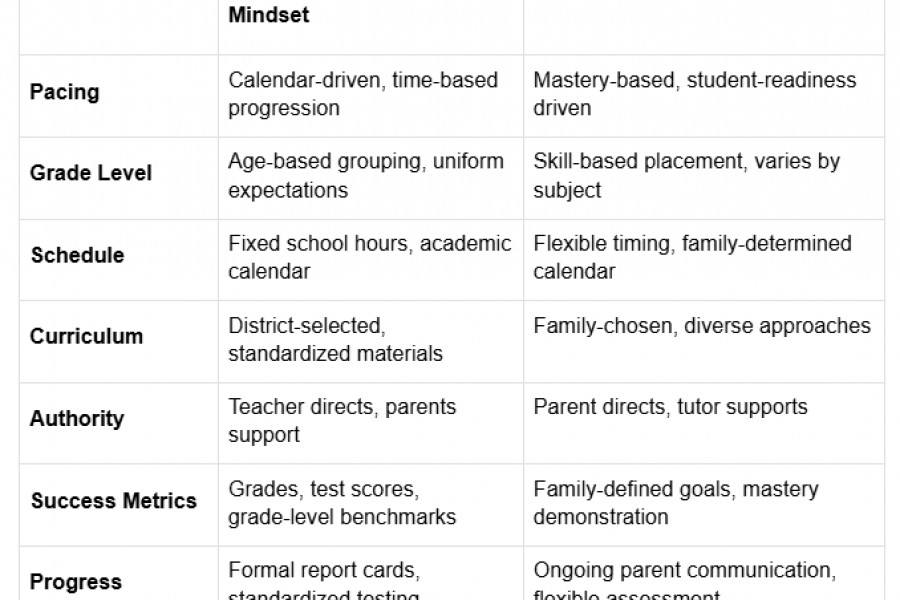
Traditional vs. Homeschool Tutoring Approaches
Homeschooling fact: As of 2024, approximately 3.7 million children, representing about 6.7% of school-age students, are homeschooled, according to recent data on homeschooling in America.
Finding the Best Homeschool Help in Fort Worth
Not all tutoring services understand homeschool families. Many tutors bring traditional teaching expectations that don't match homeschool realities. Finding tutors for homeschooling who truly understand these differences makes all the difference.
Math Around the Corner specializes in homeschool support for Fort Worth families. We've worked with homeschoolers since 2006 and understand what makes your educational approach unique. Our tutors adapt to your schedule, work with your chosen curriculum, and support your family's goals.
We offer tutoring in mathematics, science, English, foreign languages, and social studies. We provide SAT and ACT preparation that respects homeschool transcripts and unique educational backgrounds. We schedule sessions during daytime hours when traditionally schooled students are unavailable. Virtual tutoring is available for students who live far away or cannot attend in person.
Most importantly, we respect your role as primary educator. We're here to support what you're building, not to take over or criticize your choices. Our tutors collaborate with you to help your children succeed according to your family's definition of success.
Ready to work with tutors who understand homeschooling?
Call (817) 720-6284 or email scheduling@matharoundthecorner.com to discuss your needs and explore our homeschool support services. We'll provide the specialized tutoring homeschool students need without the misunderstandings that come from traditional teaching approaches.