
The Math Around the Corner Shares Tips for Choosing Summer Programs That Fit Family Schedules and Learning Goals
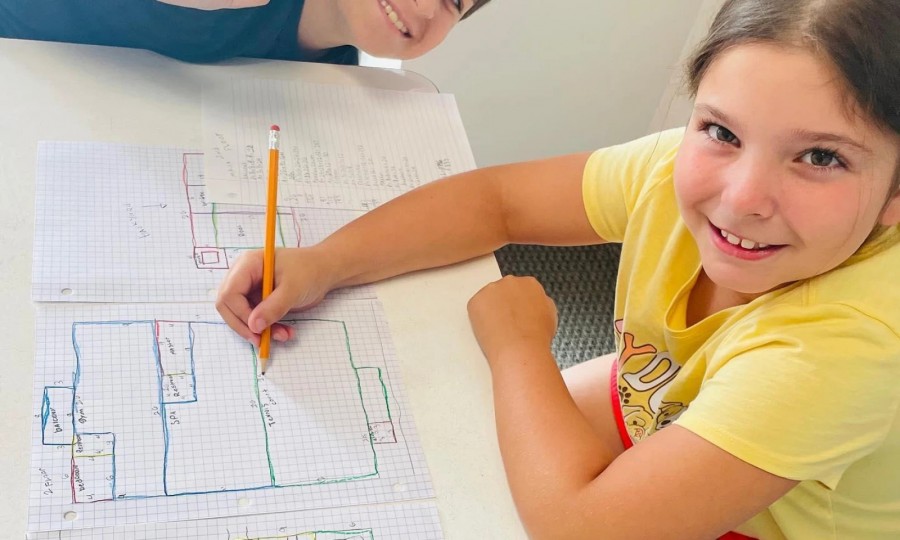
Quality matters more than convenience when selecting summer tutoring programs, but the best programs deliver both. Parents should prioritize tutor qualifications, proven success rates, and personalized instruction while seeking programs that fit family schedules and learning preferences. The right summer tutor programs near you balance academic results with accessibility, creating sustainable learning routines that prevent summer slide without causing family stress.
A large national study published in the American Educational Research Journal found that 52% of U.S. students experienced summer learning losses across five consecutive years, losing an average of about 39% of their school-year gains during each summer break. This statistic highlights why choosing the right summer learning activities matters. Parents who invest time evaluating programs based on both quality and practical considerations set their children up for academic success without sacrificing family life.
The decision between quality and convenience isn't always straightforward. Some families prioritize proximity and flexible scheduling, while others focus exclusively on instructor credentials and curriculum strength. Understanding what truly impacts learning outcomes helps parents make informed choices that serve their children's long-term educational goals.

Key Takeaways
- Tutor qualifications and proven success rates matter more than program location or schedule flexibility
- Consistent weekly sessions of 1-2 hours prevent summer learning loss without overwhelming students
- Both in-person and virtual tutoring can be effective when programs maintain quality standards
- Programs should provide regular progress updates and personalized instruction adapted to individual learning needs
- Extended hours and flexible scheduling become valuable after confirming program quality meets minimum standards
What Should Parents Look for in Summer Tutoring Programs?
Parents should evaluate five quality indicators before enrolling children in summer tutoring programs. These factors directly impact learning outcomes and determine whether programs deliver meaningful academic gains.
Tutor Qualifications and Training
The instructor's background matters significantly. Look for tutors with relevant education credentials, teaching experience, and subject matter knowledge. Programs that require minimum GPA standards, like Math Around the Corner's 3.6 GPA requirement for tutors, demonstrate commitment to academic excellence. Professional educators bring classroom experience, while advanced college students offer recent subject mastery and relatable mentorship.
Ask about tutor screening processes. Quality programs conduct background checks, verify academic credentials, and assess teaching aptitude before hiring. Programs should explain their matching process and how they pair students with tutors based on learning styles and personality compatibility.
Proven Track Records and Success Rates
Numbers tell the story of program effectiveness. Request data on student outcomes, including grade improvements, test score increases, and skill mastery rates. Math Around the Corner's 98% success rate for students attending weekly sessions provides concrete evidence of program impact. Be skeptical of programs that can't or won't share success metrics.
Look beyond general claims to specific, measurable results. Programs should track progress through assessments and provide regular updates to parents. Testimonials from other families offer valuable insights, but data-driven results matter more than anecdotal praise.
Personalized Learning Approaches
One-size-fits-all instruction rarely produces strong results. Quality programs assess each student's current skill level, identify knowledge gaps, and create customized learning plans. The initial assessment should be thorough, covering not just what students know but how they learn best.
Ask how programs adapt instruction for different learning styles. Visual, auditory, and kinesthetic learners need different teaching approaches. Programs that offer truly personalized instruction adjust methods, pacing, and materials based on individual student needs rather than following rigid curriculum schedules.
Structured Curriculum with Flexibility
The best programs balance structure with adaptability. Clear learning objectives and organized lesson plans provide direction, while flexibility allows tutors to address unexpected challenges or accelerate when students grasp concepts quickly. Review sample lesson plans or curriculum outlines to understand program organization.
Programs should align with upcoming grade-level standards while addressing current skill gaps. Ask whether education professionals design curriculum and how often it's updated to reflect current teaching standards and best practices.
Small Group Sizes or Individual Attention
Student-to-teacher ratios dramatically affect learning quality. One-on-one tutoring provides maximum individualized attention. Small groups of 3-5 students allow for personalized instruction while offering peer learning benefits. Avoid programs with large class sizes that resemble regular school settings, as these limit the individualized support that makes tutoring effective.
How Do You Evaluate Tutor Qualifications?
Tutor credentials require careful examination beyond surface-level claims. Parents should ask specific questions about education, experience, and ongoing professional development.
Education and Certification
For elementary and middle school tutoring, look for tutors with education degrees or extensive coursework in child development and pedagogy. High school subject tutoring requires deep content knowledge, typically from tutors majoring in or having completed degrees in relevant fields. College preparatory tutoring, including SAT and ACT prep, demands specialized training in test strategies and content.
Some programs employ professional teachers, while others use college students. Both can be effective when properly vetted. College students often connect well with younger learners and bring current knowledge of academic expectations. Professional educators offer years of classroom experience and advanced teaching techniques.
Teaching Experience and Track Record
Years of experience matter, but recent success matters more. A tutor who consistently helps students achieve measurable gains over the past year outperforms someone with decades of mediocre results. Ask about specific student success stories and how tutors track progress.
Request information about the tutor's experience with your child's specific challenges. A tutor skilled in algebra instruction might struggle with reading comprehension tutoring. Match skills to need rather than assuming all qualified tutors excel across subjects.
Ongoing Training and Support
Quality programs provide continuing education for tutors. Ask whether tutors receive training in new teaching methods, learning science research, or specific intervention strategies. Programs that invest in tutor development demonstrate commitment to maintaining high instruction quality.
Find out what support tutors receive when facing challenging teaching situations. Programs should offer mentorship, resources, and guidance to help tutors address diverse student needs effectively.
Is Online or In-Person Tutoring Better for Summer?
Both formats offer distinct advantages. The right choice depends on your child's learning style, your family's situation, and program quality rather than format alone.
In-Person Tutoring Benefits
Face-to-face instruction provides immediate feedback, easier rapport building, and fewer technical distractions. Young children and students who struggle with focus often perform better in physical learning spaces. In-person settings allow tutors to use manipulatives, hands-on activities, and other tactile learning tools.
The commute to tutoring locations builds routine and helps students mentally prepare for learning time. Some children benefit from separating learning space from home environment, reducing distractions, and creating a focused study mindset.
Virtual Tutoring Advantages
Online platforms eliminate travel time, expanding scheduling flexibility. Families can fit tutoring into busy summer calendars without commute logistics. Virtual sessions allow access to specialized tutors regardless of geographic location, particularly valuable for advanced subjects or test preparation.
Modern video conferencing tools enable effective online instruction. Screen sharing, digital whiteboards, and collaborative documents facilitate interactive learning. Students comfortable with technology often adapt quickly to virtual formats. Math Around the Corner offers virtual tutoring throughout the DFW metroplex, providing quality instruction beyond Fort Worth's immediate area.
Hybrid Approaches
Some programs offer both options, allowing families to choose based on weekly circumstances. This flexibility accommodates summer travel, varying schedules, and student preferences. Starting with in-person sessions to build rapport, then transitioning to virtual for scheduling convenience, combines both formats' strengths.
What's the Difference Between Tutoring and Educational Camps?
Summer tutoring programs and educational camps serve different purposes, though some overlap exists. Understanding these differences helps parents choose appropriate options.
Tutoring Focus and Structure
Tutoring targets specific academic skills, addresses learning gaps, and prepares students for upcoming grade levels. Sessions typically last 60-90 minutes and occur once or twice weekly. Instruction is highly focused on measurable academic outcomes like grade improvement, test score increases, or skill mastery.
Tutoring works best for students needing targeted academic support, whether remedial help or advanced enrichment. The one-on-one or small group format allows deep focus on individual learning needs without social programming or recreational activities.
Educational Camp Characteristics
Educational camps blend learning with enrichment activities, often running full or half days for consecutive weeks. STEM camps, coding programs, or language immersion experiences combine skill-building with hands-on projects and peer collaboration. Social interaction plays a larger role than in traditional tutoring.
Camps introduce new topics and spark interest in subjects rather than remedying specific skill gaps. Students explore areas beyond the standard curriculum, developing broader knowledge and discovering new passions. The extended time format allows for project-based learning impossible in hourly tutoring sessions.
Choosing Based on Need
Students falling behind in core subjects benefit most from focused tutoring that addresses specific skill deficits. High-achieving students seeking enrichment might prefer educational camps that introduce advanced concepts or new topics. Some families combine both, using tutoring to maintain essential skills while camps provide enrichment and variety.
Consider your child's learning needs, social preferences, and summer schedule when deciding. Tutoring requires less time commitment but demands consistent attendance for the best results. Camps provide structure and socialization but require full or half-day availability for extended periods.
How Much Time Should Kids Spend in Summer Tutoring?
Students can lose up to 25-34% of their school-year progress in math and 17-28% in reading during summer break. However, research shows that just 2-3 hours of weekly academic engagement prevents this regression. The key is consistency rather than intensity.
Recommended Time Commitments
For maintaining skills, a one-hour-long tutoring session weekly provides sufficient academic engagement. Students needing remediation or significant skill-building benefit from two sessions per week. Avoid more than three sessions weekly, as this creates burnout and reduces summer's restorative benefits.
Test preparation programs follow different schedules. SAT and ACT prep often involves 2-hour sessions once or twice weekly for 6-8 weeks before test dates. This concentrated preparation period builds stamina and test-taking strategies while maintaining focus on specific goals.
Balancing Learning and Rest
Summer serves multiple purposes beyond academics. Children need unstructured time for creativity, physical activity, and relationship building. Overscheduling academic activities can create stress and reduce the mental health benefits of summer break.
Create weekly schedules that include tutoring alongside free play, family time, and physical activities. Many families schedule morning tutoring sessions, leaving afternoons free for recreation. This approach maintains academic skills without dominating summer experience.
Consistency Matters More Than Duration
Regular weekly sessions throughout the summer produce better results than intensive daily tutoring for two weeks. Consistent engagement prevents skill regression, while cramming knowledge in short periods leads to rapid forgetting; space learning sessions across the summer to support consistent progress and stronger knowledge retention.
Balancing Quality and Convenience: A Decision Framework
Smart parents find programs offering both excellent instruction and practical accessibility. Use this framework to evaluate options systematically.
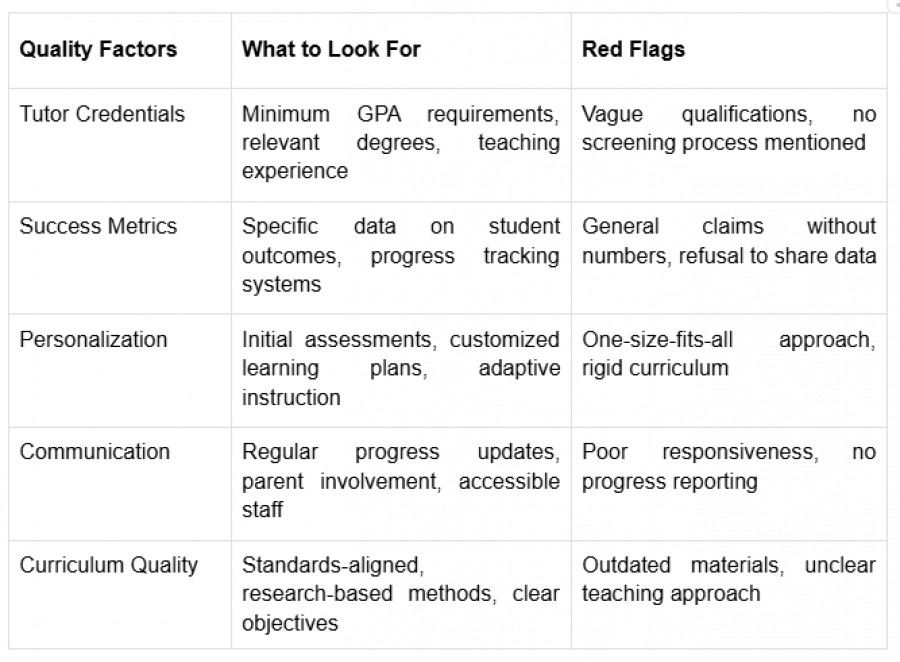
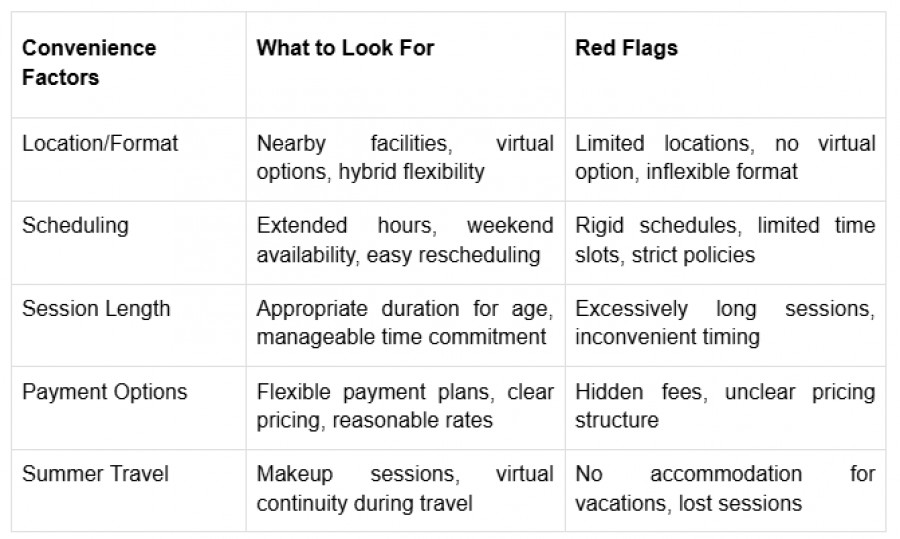
Prioritization Strategy
Start with quality. Identify programs meeting minimum standards for tutor qualifications, personalization, and proven results. Then evaluate convenience factors among quality options. Never compromise essential quality elements for convenience alone.
However, recognize that convenient programs your child attends consistently outperform perfect programs with sporadic attendance. If location or scheduling creates barriers preventing regular participation, reconsider options. Accessibility matters when it enables the consistency needed for results.
Red Flags That Indicate Low-Quality Programs
Certain warning signs indicate programs are unlikely to deliver promised results, regardless of convenience.
Unclear or Inflated Claims
Programs promising unrealistic outcomes like "guaranteed grade improvements" or "instant test score gains" often underdeliver. Learning takes time and effort. Quality programs set reasonable expectations based on student commitment and attendance.
Be wary of programs that cannot or will not explain their teaching methods, curriculum sources, or tutor qualifications. Legitimate programs transparently share how they operate and why their approaches work.
High Tutor Turnover
Frequent instructor changes disrupt learning continuity and suggest poor working conditions or management problems. Ask about average tutor tenure and what support programs provide to retain quality instructors. Programs with stable tutor teams typically offer better experiences.
Lack of Progress Monitoring
Programs should regularly assess student progress and adjust instruction accordingly. Absence of tracking systems or unwillingness to share progress data suggests programs lack accountability. Parents deserve clear information about how their children are advancing.
Rigid, Impersonal Approaches
Cookie-cutter instruction ignores individual learning needs. Programs using only workbooks or online modules without personalized tutor interaction rarely produce strong results. Quality tutoring adapts to each student's unique challenges and learning style.
Finding Quality and Convenience in Fort Worth
At Math Around the Corner, we deliver quality instruction with scheduling flexibility that fits real family routines and summer tutoring needs . We offer extended hours while maintaining consistent tutor standards and personalized learning support.
Founded in 2006 by Carol Bearden, we have served more than 400 Fort Worth area students with a very high success rate. Our tutors maintain a minimum 3.6 GPA, and we match each student based on learning style and personality. This structure supports strong outcomes without reducing flexibility for families.
2026 MAC Summer Programs
SAT, ACT, and PSAT Preparation
- Individual and group tutoring sessions
- Flexible scheduling with in-person and virtual options
- SAT boot camps for the June 6 and August 22 exam dates
- PSAT tutoring and boot camps for grades 8 to 11
- ACT preparation available through customized tutoring plans
College Essay Writing Support
- Full writing process guidance from planning to final draft
- Structure, clarity, grammar, and editing support
- Focus on college application standards and formatting
TSI and ALEKS Test Prep
- Skill refreshers and exam-focused preparation
- Customized tutoring plans
- Confidence-building test strategies
College Summer Course Assistance
- Support for math, science, language, and composition courses
- Weekly or as-needed session scheduling
- In-person and virtual tutoring options
Credit Recovery Support
- Subject-specific tutoring for all grade levels
- Individualized learning support
- Structured accountability and progress tracking
Expanded Reading Program
Elementary program based on the Science of Reading:
- Phonemic awareness
- Phonics
- Fluency
- Vocabulary
- Reading comprehension
Grade 5 and up curriculum focus:
- Advanced comprehension strategies
- Vocabulary development
- Writing mechanics
- Grammar
- Essay preparation
Math Enrichment Programs
- Refreshers: Targeted review for the upcoming school year
- Summer Assignment Assistance: Support for required summer coursework
- Jump Ahead: Review prior concepts and preview upcoming material
Foreign Language Enrichment
Tutoring in Spanish, French, and Japanese
Grammar, vocabulary, reading fluency, and conversation support
Program options include:
- Language refresh
- Cultural appreciation
- Language connections
- Study abroad preparation

Choose Summer Success for Your Child
Math Around the Corner provides the quality instruction and convenient scheduling Fort Worth families need. Our experienced tutors create personalized summer learning plans that prevent skill loss while preparing students for the next grade level. With both virtual and in-person options, we accommodate your family's summer schedule without compromising educational outcomes.
Since 2006, we've helped hundreds of students maintain academic momentum through focused summer tutoring programs. Our 98% success rate demonstrates that students who attend consistent weekly sessions achieve their goals. We serve students from kindergarten through college in all subject areas, providing targeted support where your child needs it most.
Call (817) 720-6284 to discuss your child's summer tutoring needs. We are also available via email at scheduling@matharoundthecorner.com . Our team is available Monday through Friday from 9 AM to 10 PM, Saturdays from 9 AM to 5 PM, and Sundays from 12 PM to 8 PM. We serve families throughout Fort Worth, Dallas, and nearby areas in the DFW metroplex. Don't let summer slide compromise your child's academic progress. Contact us today to create a summer learning plan that balances quality instruction with your family's lifestyle.